The Steps (1963)
knock knock
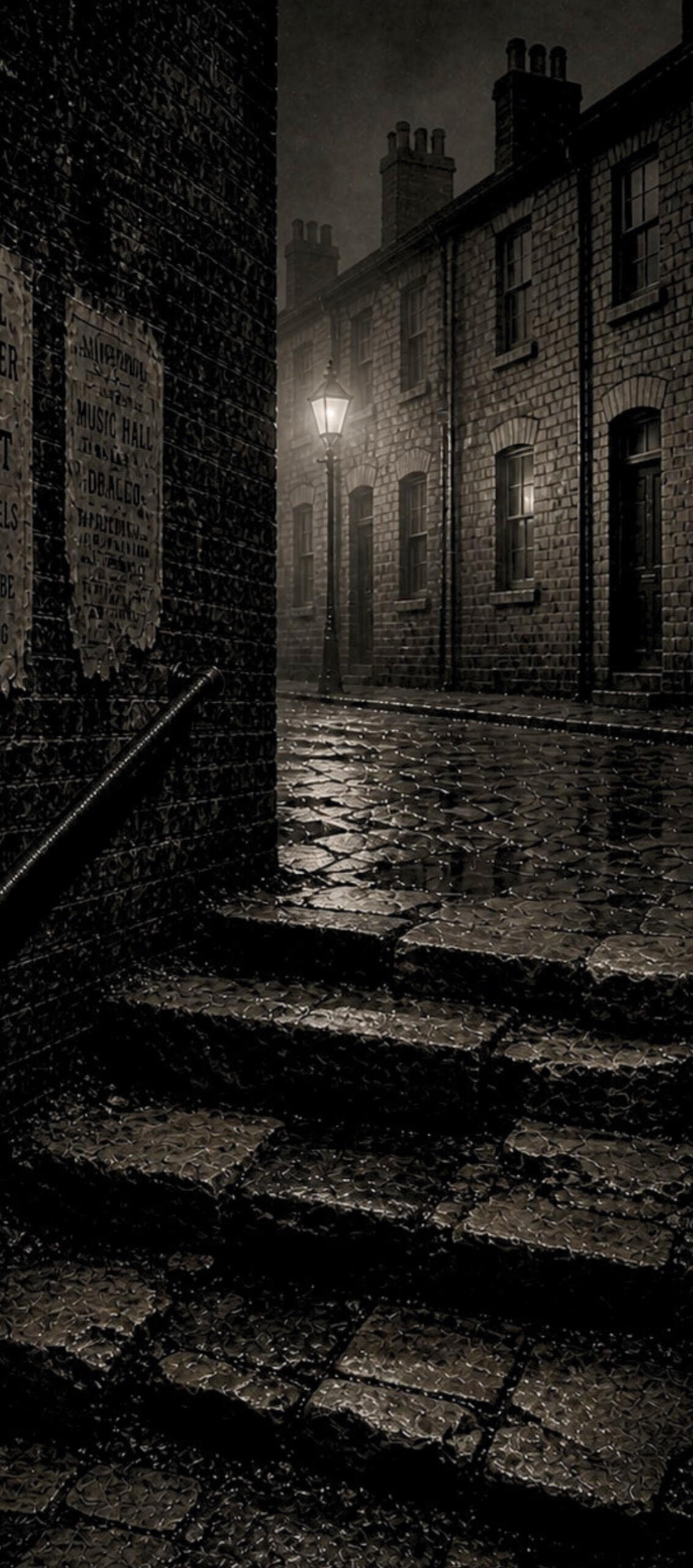
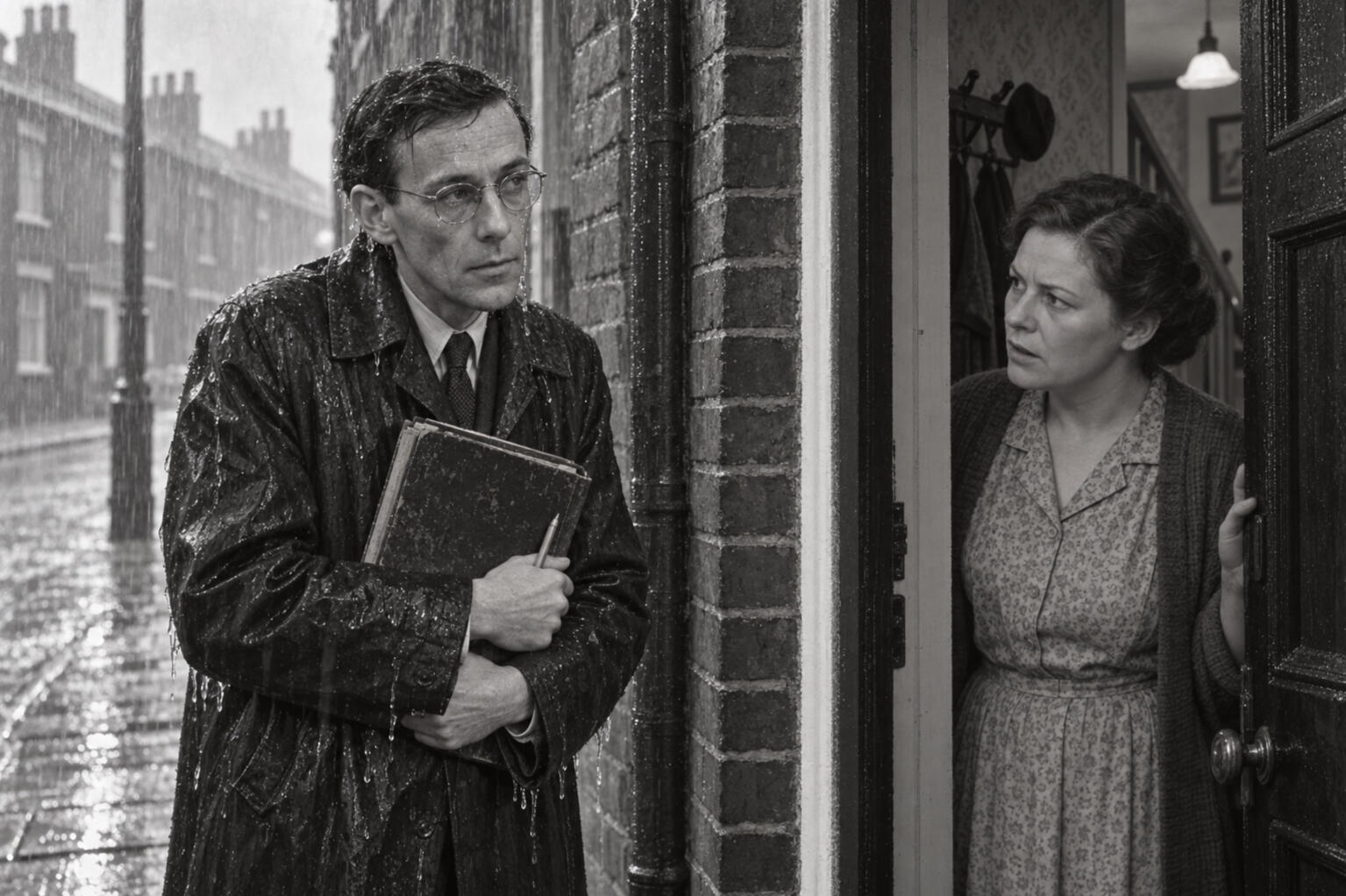
Released in 1963, The Steps followed Ted Fazakerley, a council rent collector making his weekly round through a district already marked for clearance.The people he visits know that demolition is coming, although few have been told when or where they will be sent.Fazakerley can collect what they owe but has no answers to the questions they ask him.
Born only streets away, Fazakerley has escaped the insecurity of the district by taking a secure council job.His position now places him between the residents who remember him and the authority preparing to remove them.
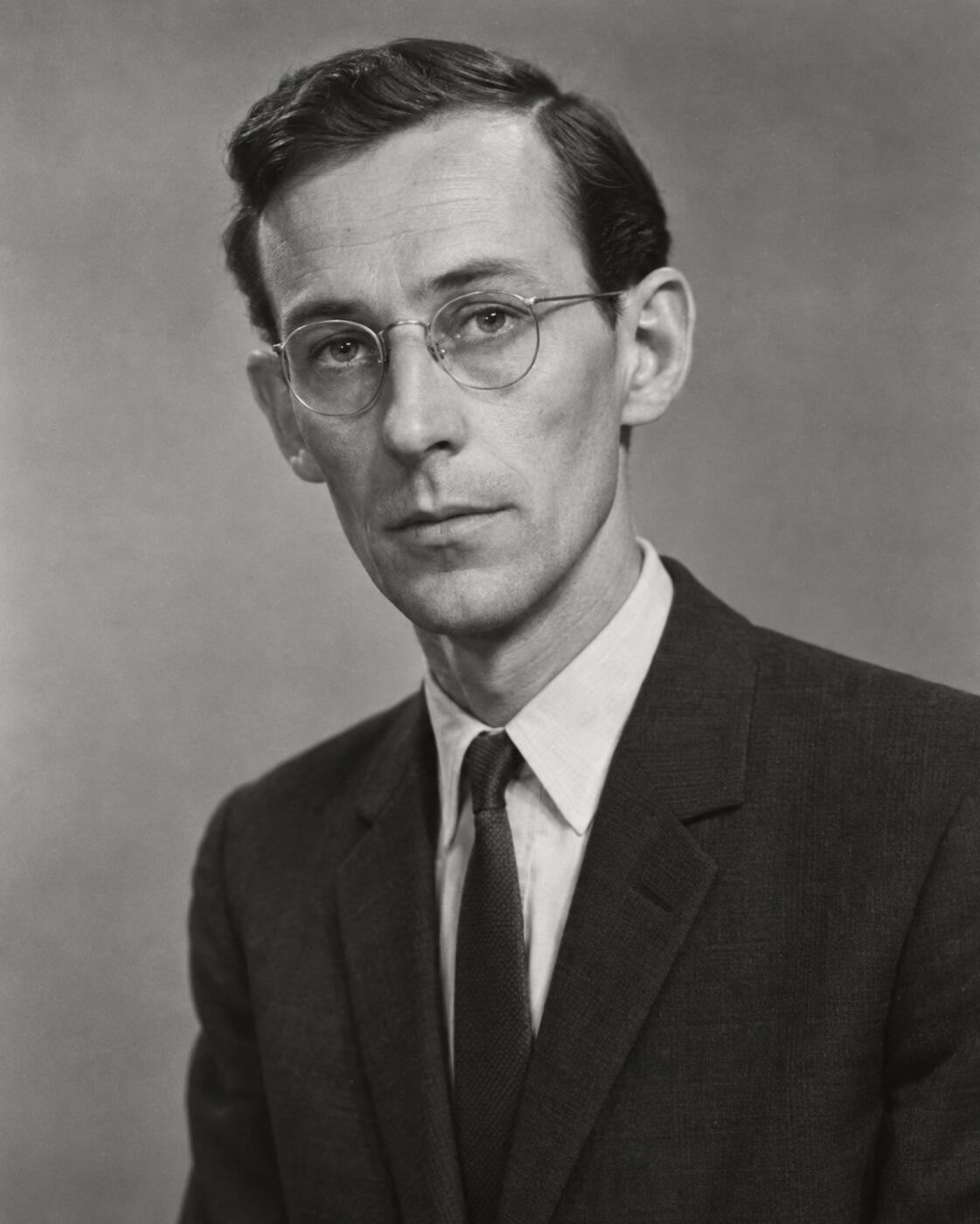
Frank Baxendale (1923–1996)Born in Cleveleys in 1923, Frank Baxendale worked as a wages clerk in a textile mill and served in the Home Guard during the Second World War due to asthma and flat feet. He began acting with an amateur company in peacetime and entered repertory theatre comparatively late, appearing in Burnley, Preston and Harrogate throughout the 1950s.His narrow build, quiet delivery and slightly formal manner led to frequent roles as clerks, teachers, accountants and junior officials. Baxendale appeared regularly in radio drama and made occasional television appearances, although The Steps provided his only leading film role. His performance as Ted Fazakerley was noted for its restraint, with much of the character’s discomfort conveyed through pauses and small changes in expression rather than dialogue.In 1968, Baxendale was imprisoned for his part in fixing a series of greyhound races at tracks across the North. Little is known of his life after his release. He died in Lancaster in 1996, aged 73, after being knocked from his bicycle by a milk float.
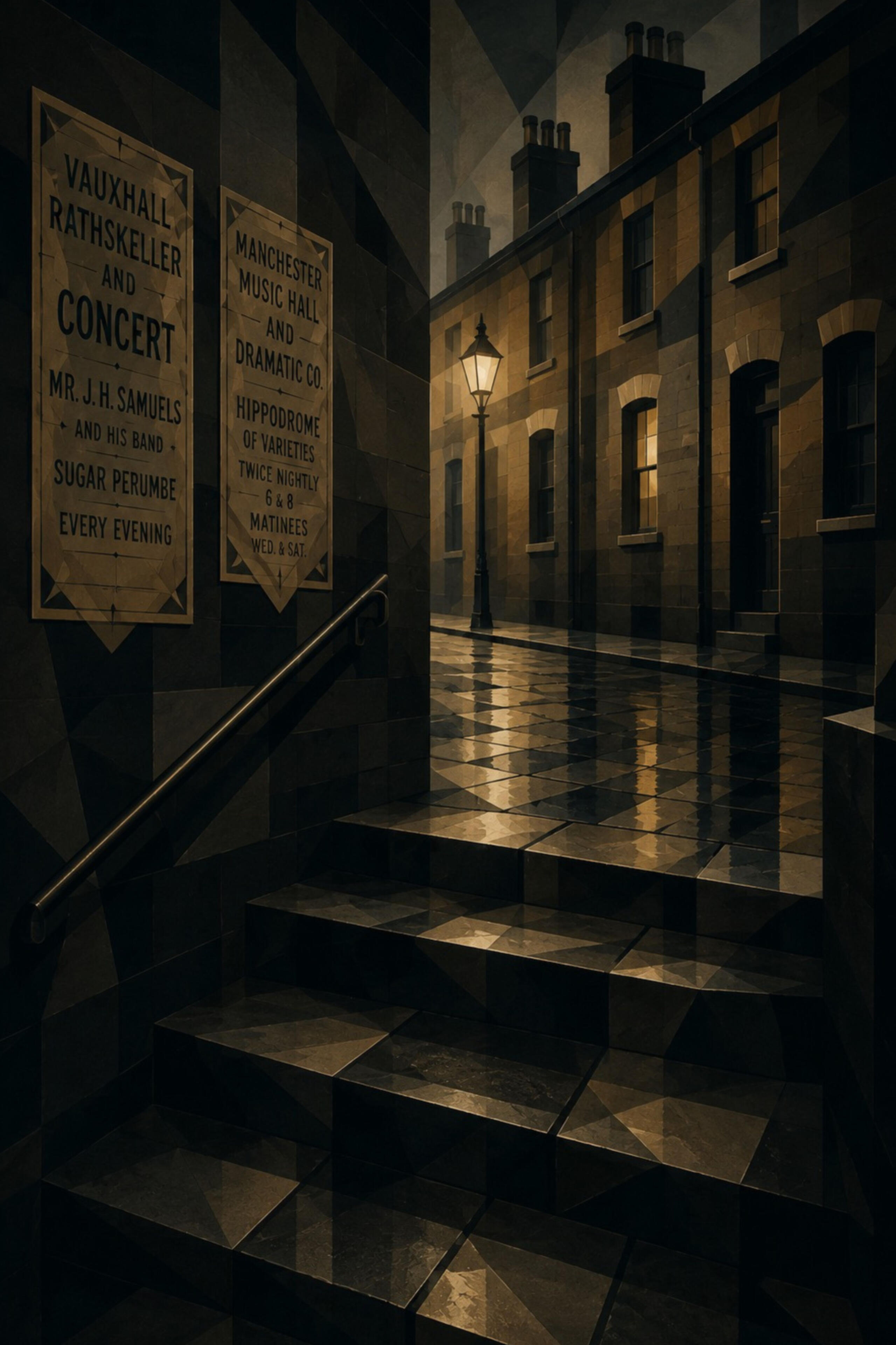
The Steps (Northern Deco)Olive James based her design for The Steps on the steep passage repeatedly used by Ted Fazakerley during his rent-collection round.The irregular stonework, wet surfaces and competing angles were reduced to a geometric arrangement of light and shadow, while the old entertainment bills were retained as reminders of an earlier district already disappearing beneath neglect and clearance.The solitary streetlamp marks the point between the houses above and those below, illuminating the route without revealing where it leads.Available exclusively through FCSF, this artistic interpretation is available unframed on 240 gsm art paper and measures 16 x 20 inches.
What did the critics think?
As was a recurring feature with Crimea Films, reviews were never really glowing.The Listener“Frank Baxendale gives a controlled performance as a man whose modest advancement has placed him on the wrong side of every doorstep. The film understands that embarrassment can be as revealing as anger.”The Wigan Post“Crimea Street Films finds some drama in rain, stone and repetition, although the procession of unpaid rents and reluctant departures occasionally tests the patience. Baxendale nevertheless holds the picture together with admirable precision.”Huddersfield Tribune“Without speeches, villains or convenient acts of defiance, The Steps examines clearance from the viewpoint of the minor official required to continue collecting money from houses already condemned. Its quietness should not be mistaken for neutrality.”The film proved relatively popular compared to some of the other productions and was one that Dunmore enjoyed making.
From the archive
A surviving copy of Baxendale’s shooting script contains columns of figures written across several blank pages, together with the names of greyhounds running at Belle Vue, White City and Salford.For many years these were assumed to be research notes connected with Fazakerley’s rent ledger. Following Baxendale’s conviction in 1968, it became apparent that the entries recorded odds, payments and the initials of contacts later named during the greyhound-racing investigation.At least two sets of calculations were made while The Steps was in production.
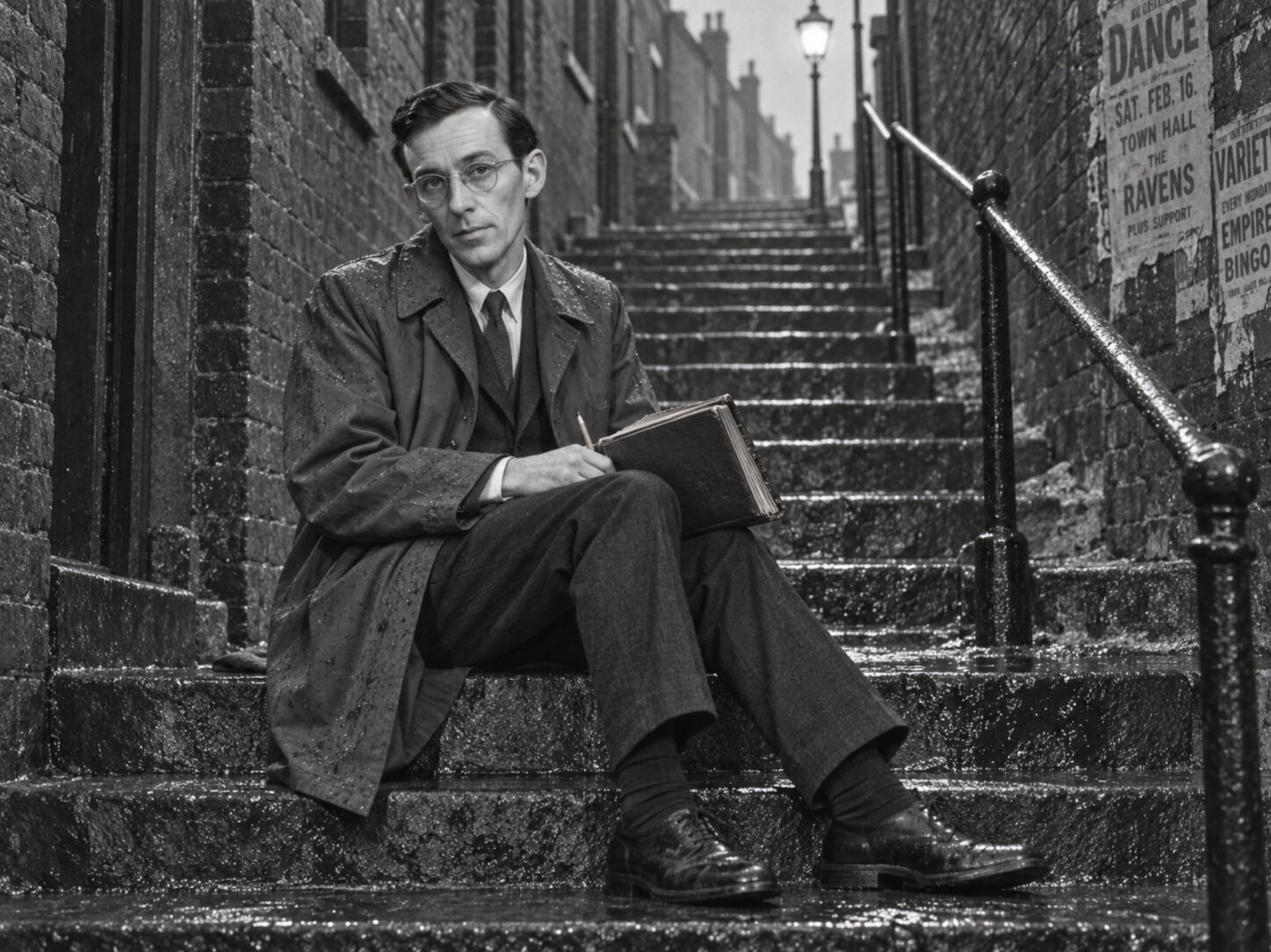
Publicity shot from the archive
The artwork of Reg Baines
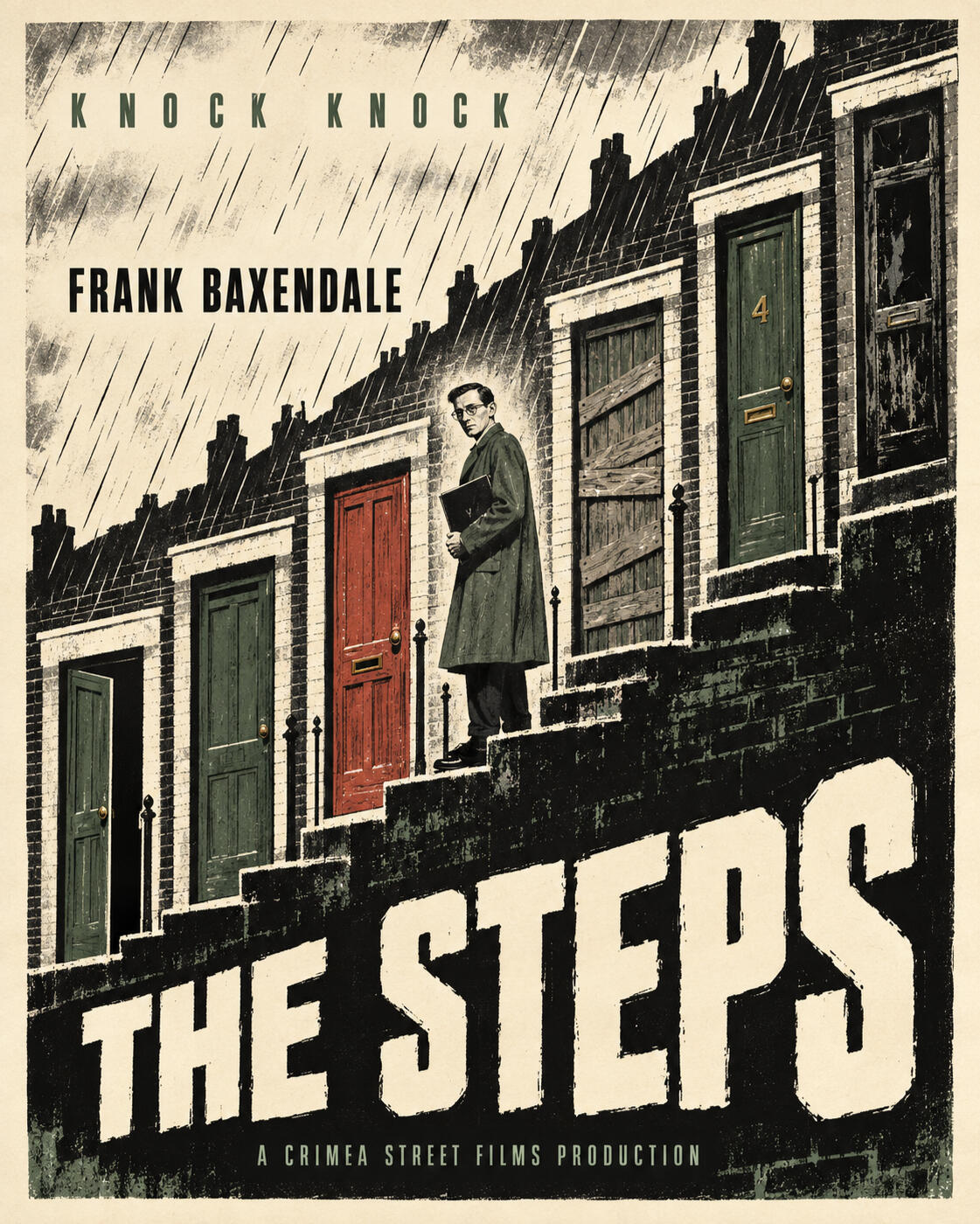
The original posters created by Reg Baines are synonymous with the studio and are very much part of its history.They would have been seen throughout the North of England outside cinemas, on hoardings and in places such as train stations.Most of them were damaged in a fire at the studio in late 1966, but we are delighted to now work with Parbold based artist, Brian Astley.He has faithfully reproduced each poster to a standard that our Reg would have been proud of and each one is available unframed on 240 gsm art paper as a 16 x 20 inch homage to the films we celebrate.